
Rydo
Connected. Confident. Coached.
A guided riding system pairing a mobile app with a smart-glove prototype, built to help new motorcyclists feel coached, confident, and safe without adding distraction on the road.
Team: Christopher Mueller & Sanghavi Vijayakumar
Making the first months of riding less intimidating
Shandoka Motorcycles asked us to make the first months of riding less intimidating for new motorcyclists. We designed Rydo: a guided riding system pairing a mobile app with a smart-glove prototype that coaches riders in real time and connects them to a trusted community.
The goal was simple to state and hard to solve: help beginners feel coached, confident, and safe without adding distraction on the road.

New riders drop out early
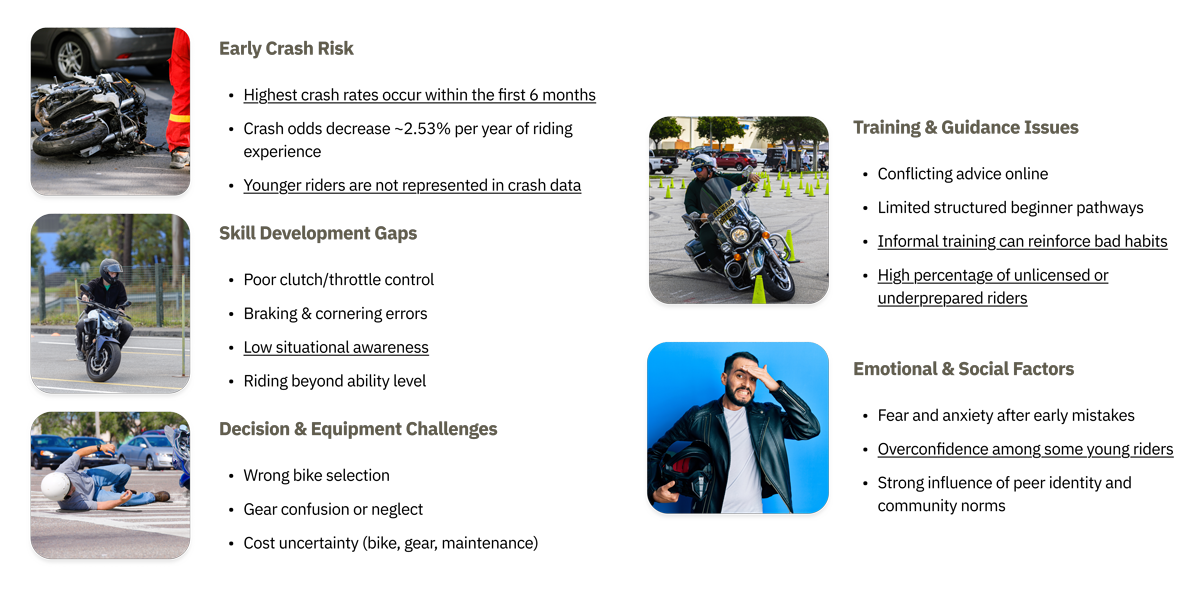
The gap between passing a safety course and feeling genuinely competent is wide, lonely, and often unsafe. Existing apps pile on features and notifications, exactly the wrong thing to hand someone managing a 400-pound machine at speed.
We framed the challenge around three needs:
Confidence through preparation
Feeling ready before the engine starts, not just after years in the saddle.
Support without distraction
Guidance that keeps a rider's eyes up and hands on the bars.
Community without pressure
Small, trusted groups instead of large, competitive, chaotic rides.
Grounded in real behavior, not assumptions
Secondary research, four in-depth rider interviews, and two journey maps covering solo and group rides.
What riders value
- Freedom and confidence through preparation
- Small, trusted groups over large chaotic rides
- Safety as something proactive
- Minimal interaction during rides
Pain points
- Skill mismatch and pressure in group rides
- Poor coordination, losing riders, pace gaps
- Unexpected changes create stress
- Too many apps and distracting tech
Design opportunities
- Skill-based group matching
- Smart pre-ride planning
- A minimal Ride Mode
- Real-time group visibility
- Predictive safety alerts
Secondary Research
What four riders taught us
Four in-depth conversations with new riders, exploring how they prepare, what scares them, and what would actually make them ride more.
“You feel safe when you're prepared, not just when you're experienced.”
“There's no app yet that lets you ride freely while knowing your group is safe and coordinated.”
“I just like the simple ride, enjoying nature.”
One solo ride, five emotional stages
Mapping a new rider's first independent loop surfaced exactly where confidence wavers, and where Rydo could step in.
Pre-Ride
Checks weather, gears up, chooses a short route.
“Am I ready for this?”
😬 Nervous · ⚖️ Unsure- No structured plan
- Fear of embarrassment
- Skill uncertainty
- Guided micro-practice plan
- Pre-ride confidence check
Pulling Out
Starts bike, balances, eases off the clutch.
“Don't stall. Don't stall.”
😰 High tension- Jerky clutch and throttle
- Balance at low speed
- Being watched
- Low-speed control coaching
- Smoothness feedback
Neighborhood Loop
Practices turns and stops, scanning driveways.
“Am I doing this right?”
😐 Focused but alert- Turn speed judgment
- 4-way stop anxiety
- Lane positioning doubt
- Turn analytics
- Intersection strategy training
Unexpected Hazard
Reacts to a car, dog, or gravel.
“Oh no!”
😳 Startled · ❤️ Adrenaline spike- Panic braking
- Target fixation
- Confidence drop
- Hazard replay breakdown
- Panic-response coaching
Return Home
Pulls in, shuts the bike off, reflects.
“Was that good or bad?”
😮💨 Relief · 🙂 Mixed confidence- Overanalyzing mistakes
- No clear measure of progress
- Progress dashboard
- Confidence reinforcement
Full Journey Maps
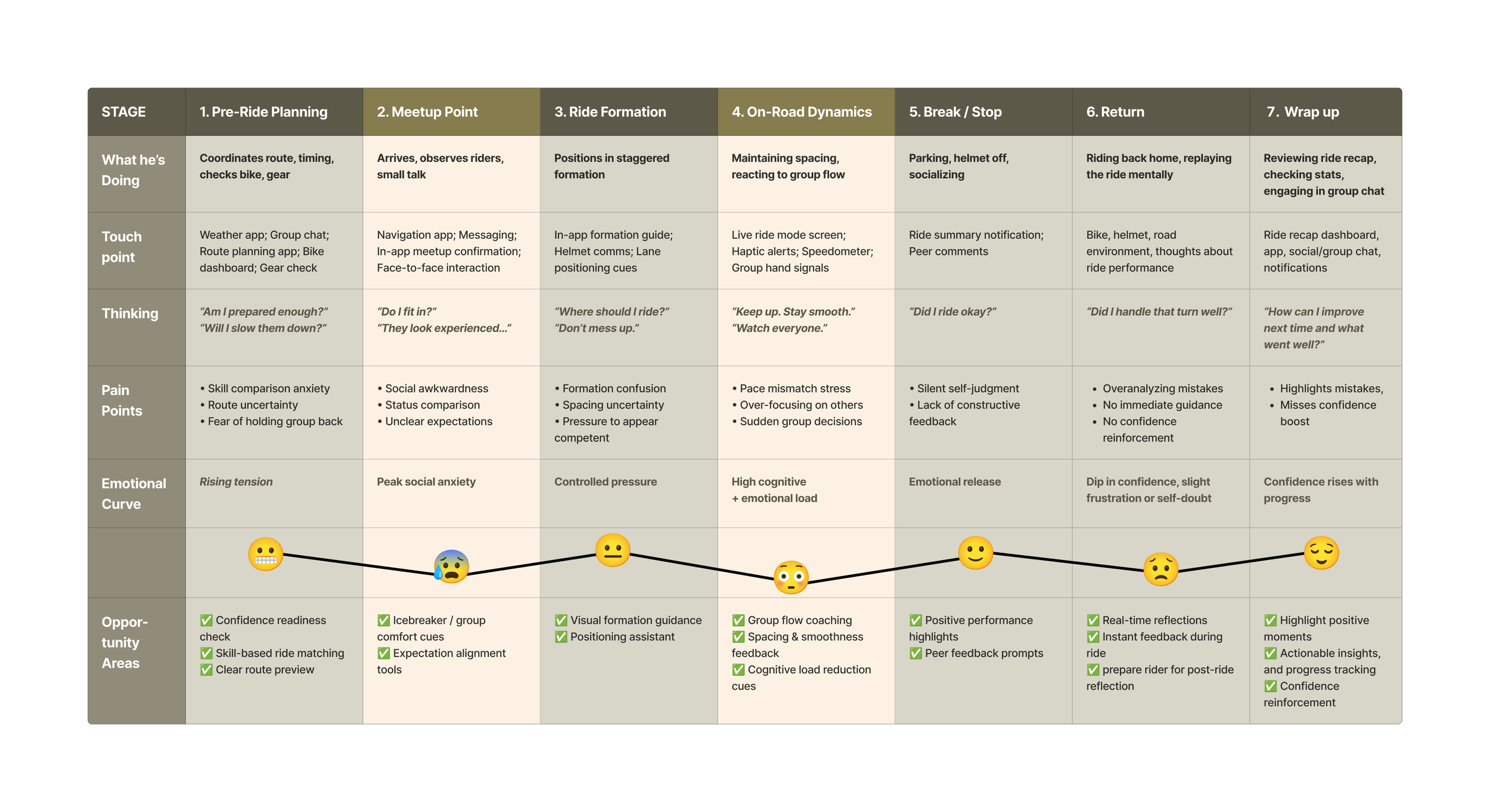
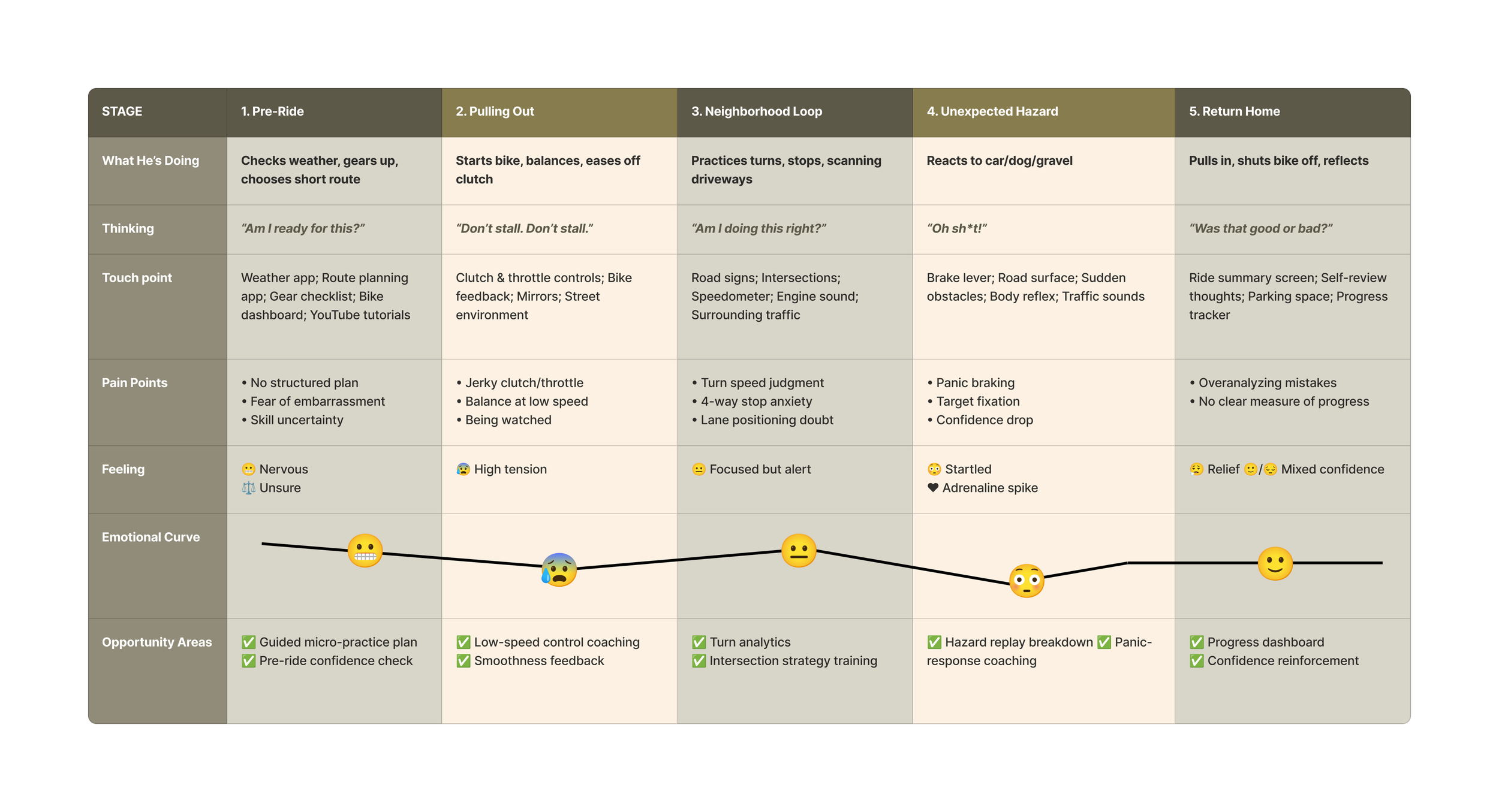
Two new riders, two very different fears
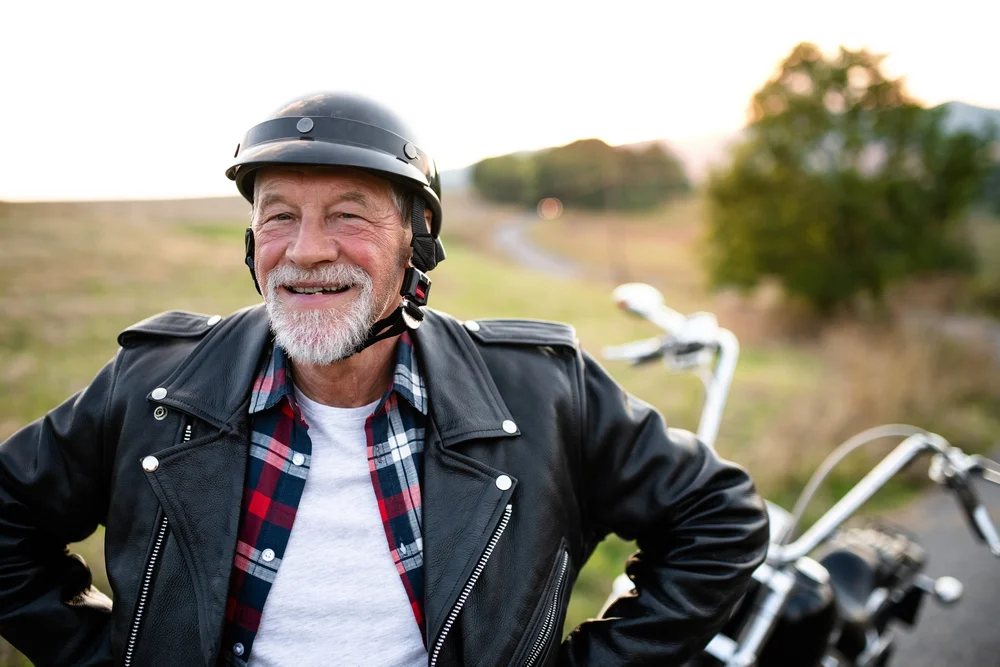
Tom Reynolds
The Late-Bloom New Rider- 65 · Retired
- Boulder, CO
- Harley-Davidson Pan America · 3 yrs
A careful late-bloomer who wants to progress safely, not compete.
Pain Points
- Hard to find peers at the same skill level
- Online culture feels competitive
- Fear of injury
- Wants validation of safe progression

Jake Miller
The Adrenaline-First New Rider- 24 · Plumber
- Phoenix, AZ
- Used Harley / Kawasaki · 6 yrs
An adrenaline-first rider who finds safety messaging preachy.
Pain Points
- Poor hazard anticipation
- Pressure to keep up
- Sees safety as preachy
- Gear feels restrictive
Answering the research with restraint, not more features
Ride Mode
A stripped-back interface that surfaces only navigation and hazard cues, so riders keep their eyes up.
Smart-Glove Alerts
Real-time hazard and turn cues delivered through haptics, replacing screen glances entirely.
Skill-Based Group Matching
Pairs riders by ability and pace, so beginners aren't pushed past their limits.
App Coach
Adaptive guidance and post-ride feedback that builds confidence over time.
From sketches to a working glove
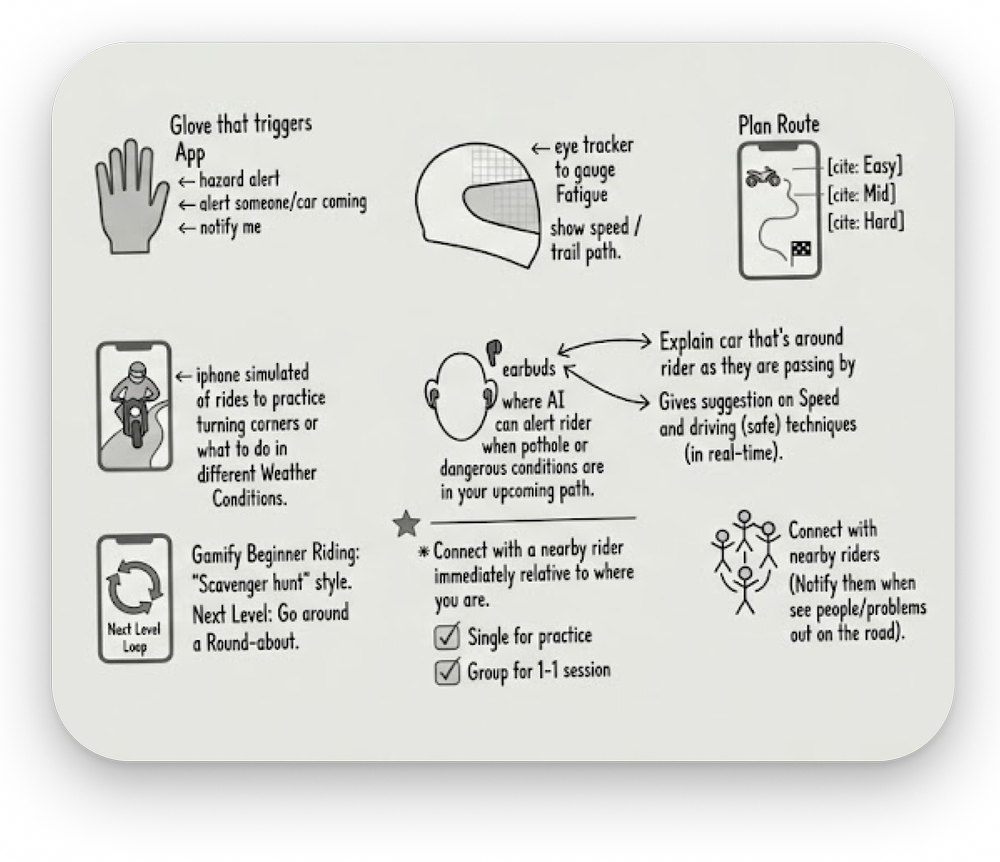
Ideation
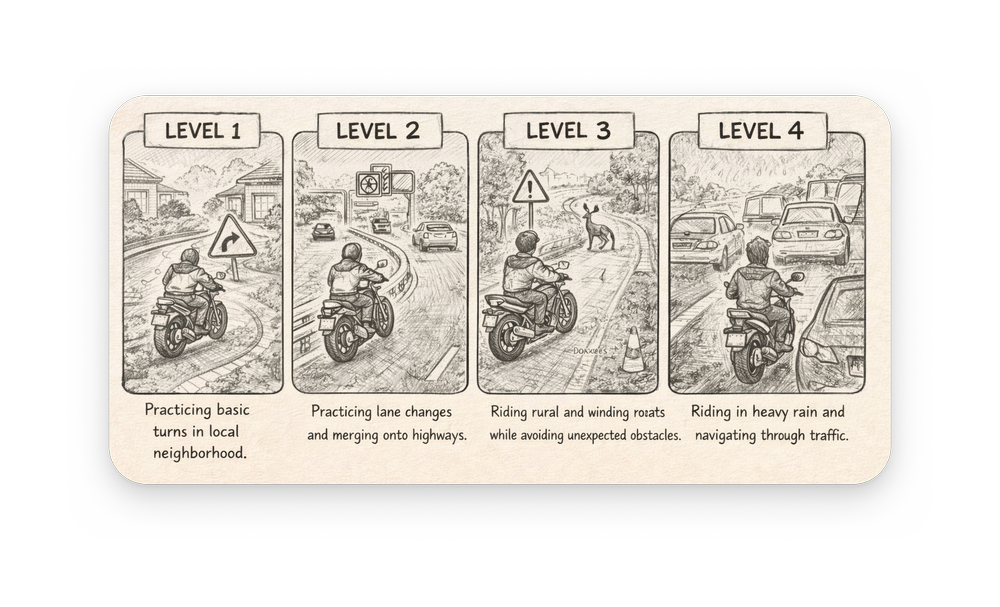
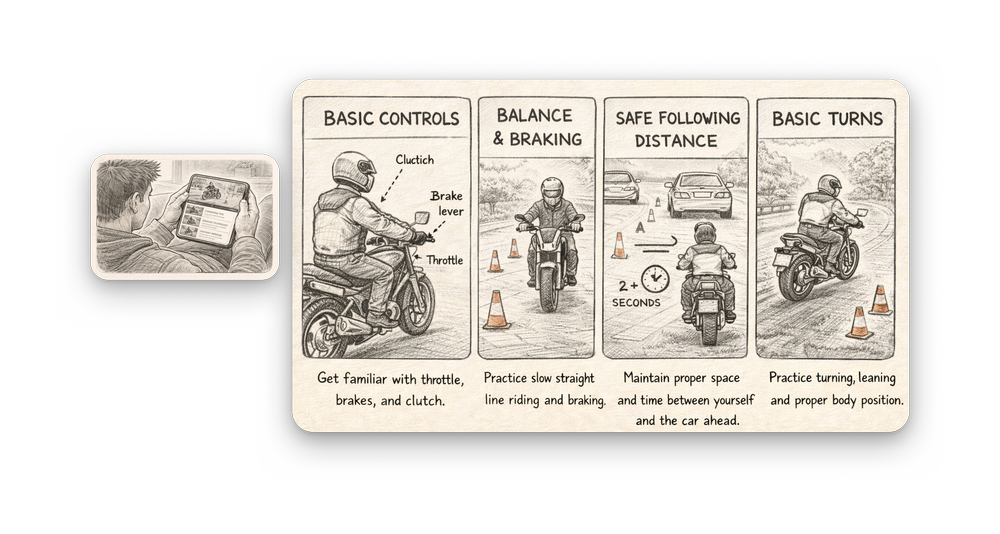
Exploring interface and interaction concepts on paper before committing to pixels. Tap any image to enlarge.
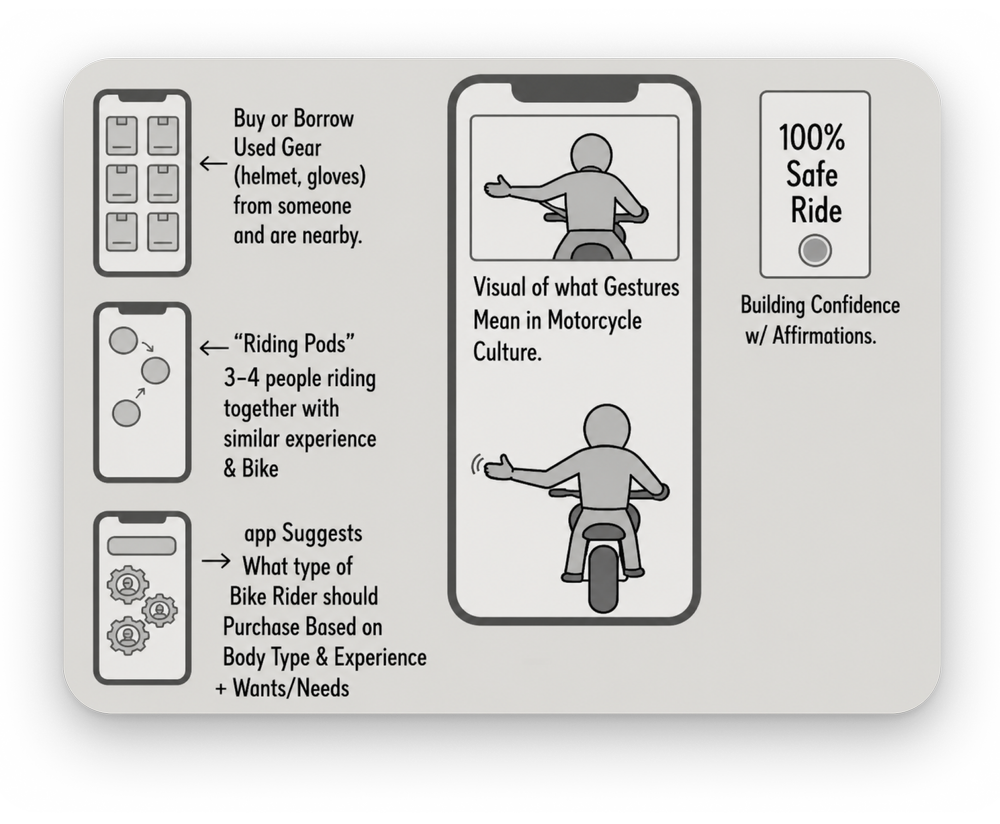
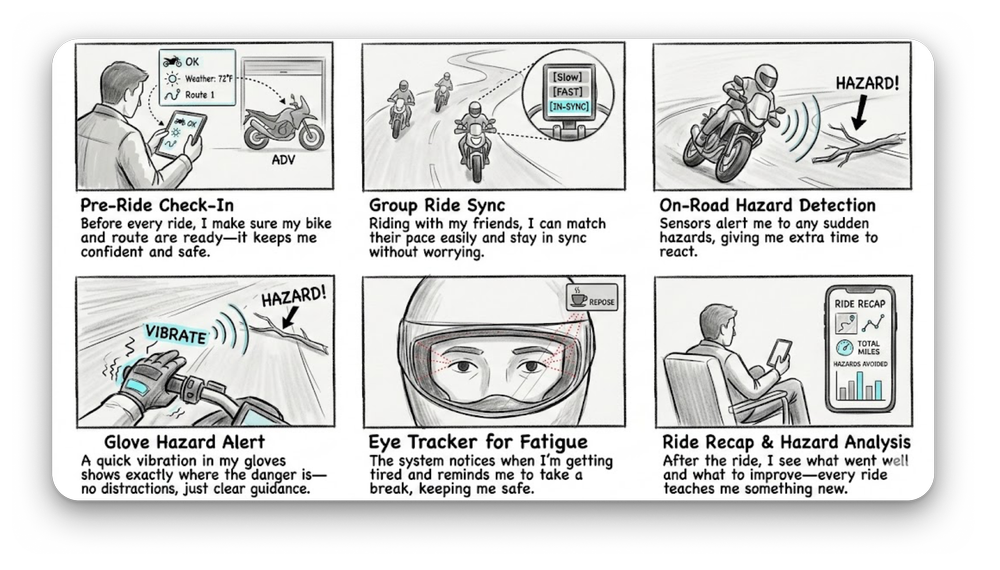
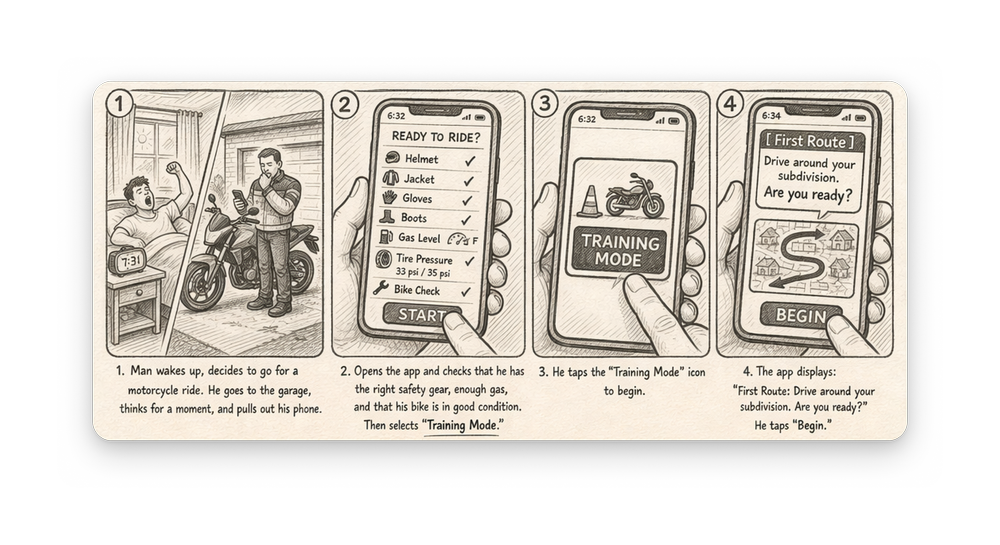
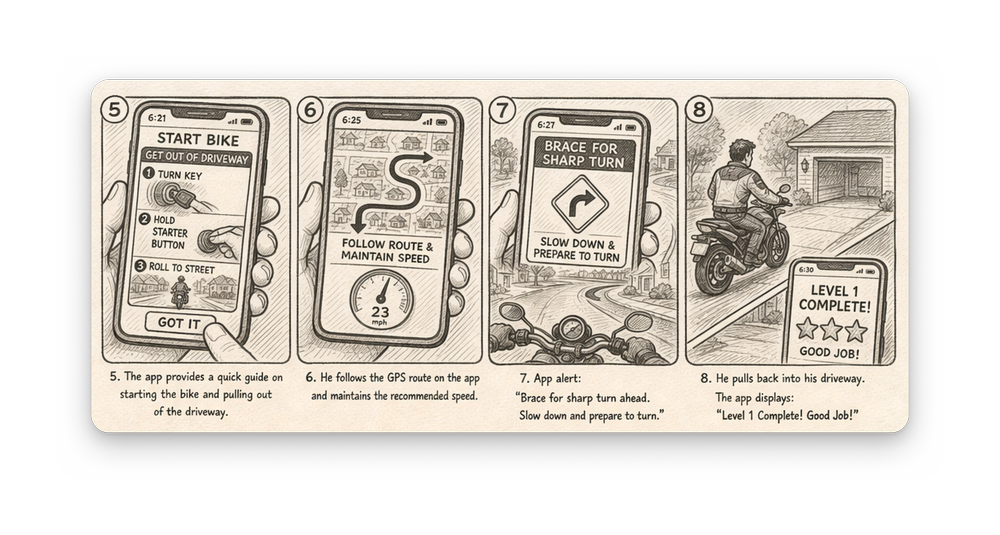
Motorcycle Glove Prototype
A working smart-glove that delivers turn and hazard cues through haptics, no screen required.
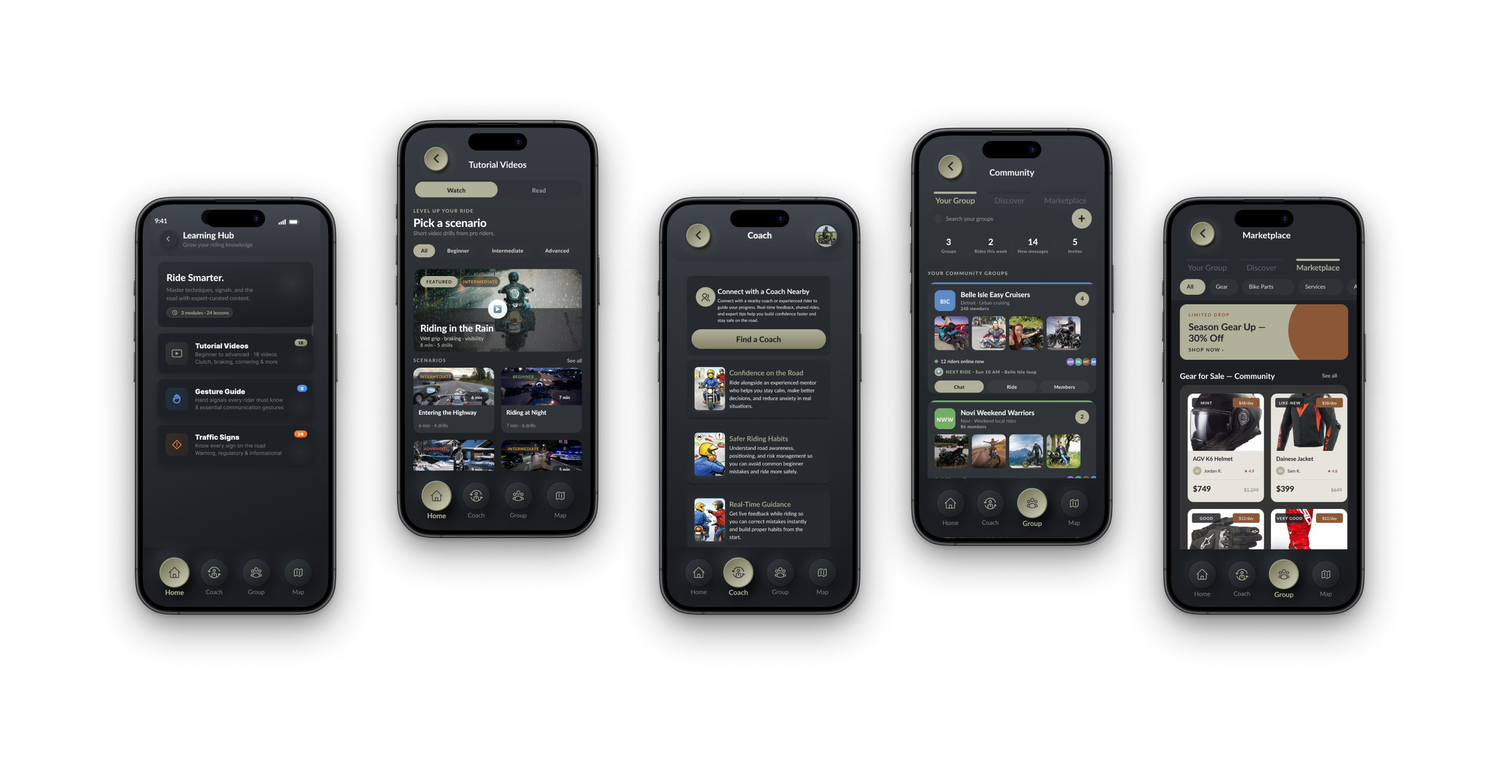
High-Fidelity Screens
The Ride Mode, Coach, and group-coordination flows brought to life. Tap any image to enlarge.
Riders understood it without coaching
In usability sessions, new riders understood the core flow without coaching and described Ride Mode as “calm.” The glove prototype validated the core bet: haptic alerts can replace screen glances entirely.
The clear next step is a longitudinal pilot to measure confidence gains across a full riding season.
Take Rydo for a ride
Step through Ride Mode, the App Coach, and group coordination in the interactive prototype.
View App Prototype